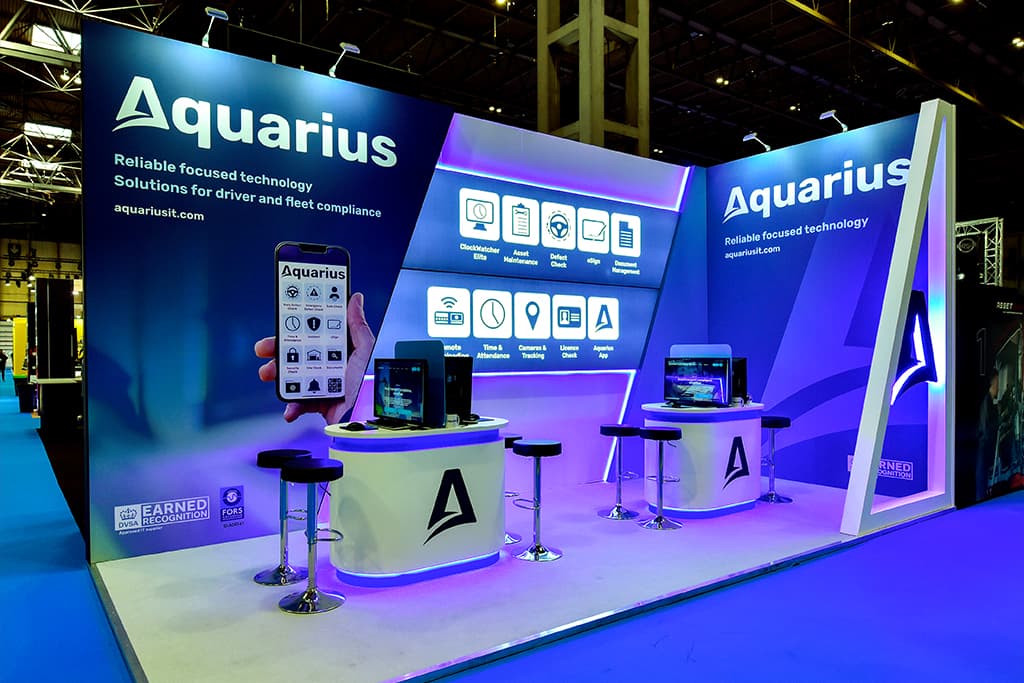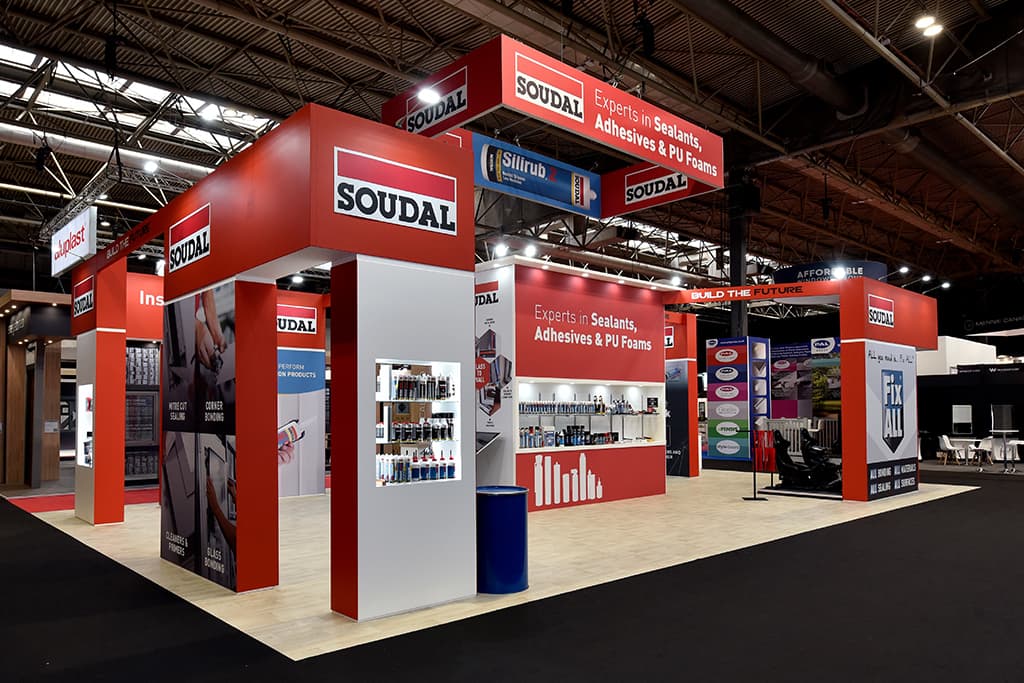
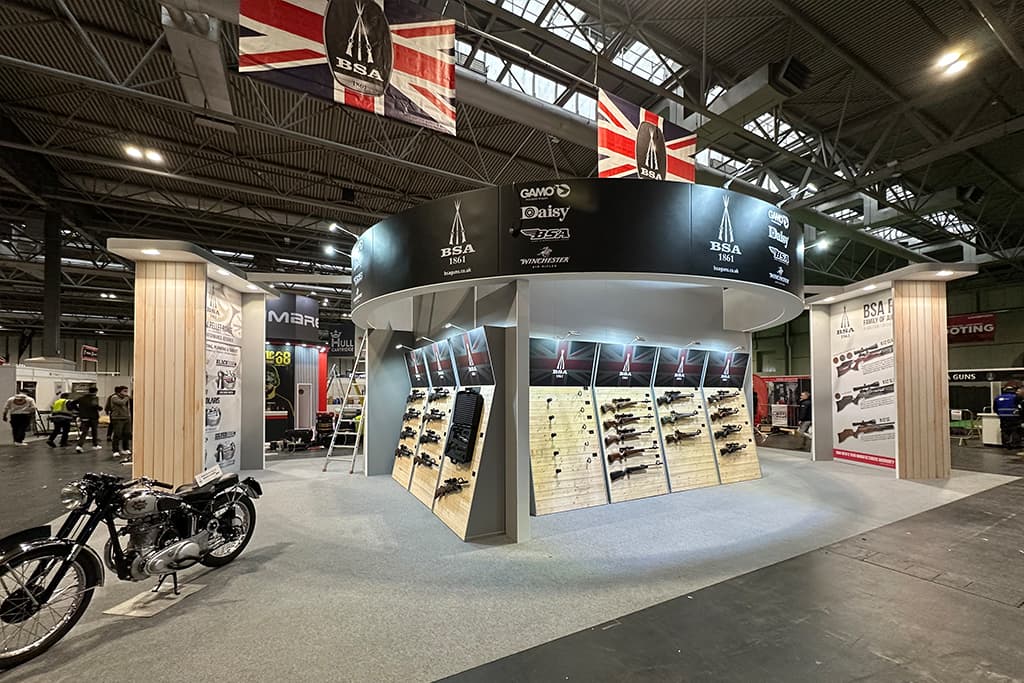
Look for a builder with deep local knowledge of the NEC, a permanent in-house team, and a track record with exhibitors in your sector. The right partner handles everything from design through breakdown, leaving you free to focus on selling.
Why local knowledge matters at the NEC
The NEC Birmingham is one of the UK's biggest exhibition venues. It has its own quirks, restrictions and opportunities. A stand builder that works there regularly knows the rules, the loading procedures, the best spots for power and WiFi, and how the space actually feels on the day.
When your builder is local, they can visit the venue with you before you design anything. They understand the sight lines, the foot traffic patterns, and what works in that specific hall. They have also built dozens of stands there. That experience is worth paying for.
Proximity matters too. If something goes wrong on setup day, you want someone 20 minutes away, not 200 miles. Our workshop is in Tamworth, about 20 minutes from the NEC, and you can see what that means in practice.
Check they have a real team, not just a network
Some stand builders outsource everything. They design on a computer, then pass the job to whoever is cheapest. Quality suffers. Timelines slip. Communication breaks down.
Look for a builder with permanent carpenters, electricians and fabricators on staff. These people know your job inside out because they have worked on similar briefs before. They spot problems early. They take pride in the work.
A solid team also means consistency. You get the same standard every time, not a lottery depending on who gets subcontracted that month.
Look at who they have built for
A good stand builder will have a portfolio of real work. Ask for case studies in your sector, or sectors similar to yours. See how they have solved problems. Look at the quality of the build, the graphics, the finishing details. Ours is here.
Better still, ask if you can speak to someone they have worked with before. If more than 75% of a builder's work comes from repeat clients, that is a strong sign.
That loyalty does not come from flashy branding or clever sales talk. It comes from delivering the same quality year after year, on time, on budget, and with proper support.
Understand what full service actually means
You do not want to juggle multiple suppliers for design, build, graphics, transport, installation and breakdown. That is stressful and error-prone.
A full-service builder handles it all. They own the relationship with you from first sketch to the moment your stand comes down. They design it, build it, deliver it, install it, manage the breakdown, and store it between shows if you need them to.
This also matters for accountability. If something goes wrong, there is one person to call. No finger-pointing between suppliers.
Ask for 3D visuals before any build starts
You need to see what your stand will actually look like before a single piece of wood gets cut. A 3D visual shows you the layout, the colours, the graphics, how your products will be displayed, and how visitors will move through the space.
This matters because once you see it, you can make changes cheaply and easily. Changes mid-build are expensive and slow.
A professional builder will do this as standard. It is not an extra. It is part of the design process.
Get a clear quote with no surprises
The best quotes are detailed and transparent. They break down what you are paying for: design time, materials, labour, graphics, transport, installation, breakdown and storage.
Avoid vague quotes, or a promise to confirm the final price once someone has looked at the venue. That is how you end up with cost overruns.
A good builder will quote you honestly. If there are variables, they will explain them clearly and give you a range or a cap.
Check they are properly accredited
Look for membership of trade bodies like ESSA, the Event Supplier and Services Association. This shows the builder takes standards seriously and keeps up with industry best practice. It is not a guarantee of quality, but it is a useful signal.
Build a relationship, not a transaction
Your stand builder should feel like part of your marketing team, not an order-taker. They should ask good questions. Why are you exhibiting? Who do you want to attract? What do you want them to do or feel?
The best builders approach each job as bespoke, because every business has different goals. One company might want a quiet meeting space. Another wants high-energy engagement. The design should reflect that.
A builder that listens and thinks strategically is more valuable than one that just builds what you ask for.
How to get started
Reach out with an outline of your brief. The best builders will give you honest initial advice about what is realistic, what is smart, and what is probably overkill. If you are not sure what to put in it, start with our guide to writing an exhibition stand brief.
Then ask for a meeting to discuss design ideas and see some previous work. Get a clear quote in writing. Check references if you can.
Once you have chosen your builder, trust them. They have done this hundreds of times. You have not. If you are exhibiting at the NEC and want honest advice and a clear quote, get in touch.
FAQ
How far in advance should I book a stand builder?
Six months before the show is ideal. That gives you time for proper design, any revisions, and a build schedule that is not rushed. Design approval and the CDM declaration can take up to six weeks, and finished artwork is needed four weeks before the show. If you are closer to the date, contact builders anyway: some have gaps in their schedule.
Can I reuse my stand at other venues like ExCeL and Olympia?
Yes. A custom stand can be designed from the outset to reconfigure for different space sizes and layouts, then stored between shows. Tell your builder at the brief stage which venues you are likely to exhibit at, so the structure is planned around adapting rather than rebuilding.
What happens if I need changes close to the event?
Small changes are usually fine. Major changes become expensive and risky close to the date. That is why the 3D visual stage matters so much: get it right early and you avoid panic later.